Friday, September 9, 2011
Lean and Loafe Like your Uncle Walt
You can reckon a thousand acres much, or the earth much, or the weedy patch of Brooklyn that you know and love well much. You can lean and loafe at your ease observing the flowering of a summer grass you pass. You can try to fetch the spirit of Brooklyn's own Whitman as you wander, missing him somewhere and searching another, and wonder if it isn't as true as ever that there will never be more perfection than there is now as the day he wrote his line. Rain or no rain, but we are hoping for a little less rain next week though.
*This post and a good part of its words and phrases were shamelessly stolen from Whitman's Song of Myself and tweaked into a little song of a late summer's day in Brooklyn with a break from the rain. (I'm not sure why I'm on an historic bent these days, but it will probably pass like all things.)
Where my volunteer Coneflower (Echinacea purpurea) is at today.
Thursday, September 8, 2011
The More Things Change

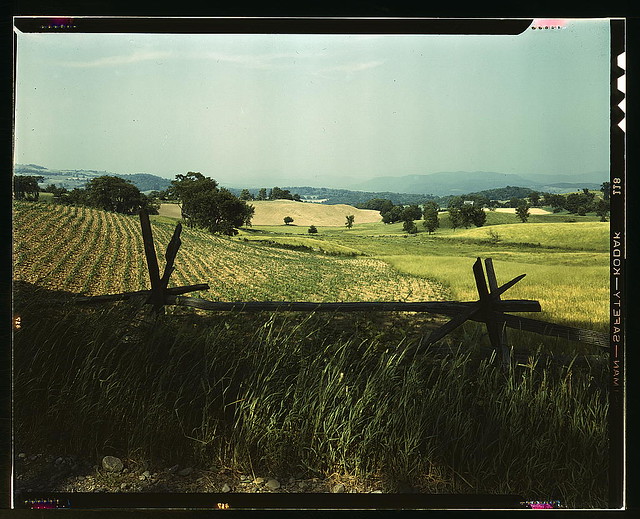
Farmland in the Taconic range, near the Hudson River Valley in New York state (LOC) by The Library of Congress, on Flickr.
Collier, John,, 1913-1992,, photographer.
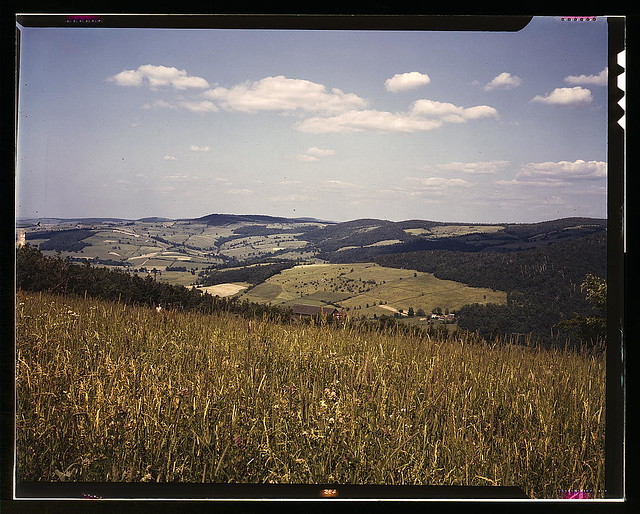
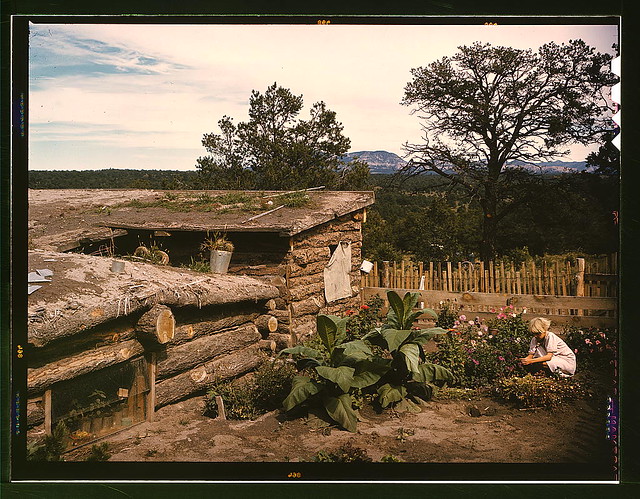
...the more the issues of the day remain the same and there is nothing new in the world under the sun. (I could throw in some more idioms if you like.) These pictures are from the Library of Congress, circa the 1940's, of New York state farmland and a homestead in Pietown, New Mexico. When I look at those old pictures of New York famland, I wonder how that land looks today and if it's still being farmed.

Farmland in the Catskill Mountains, Richmondsville, N.Y. (LOC) by The Library of Congress, on Flickr
Collier, John,, 1913-1992,, photographer.

Garden adjacent to the dugout home of Jack Whinery, homesteader, Pie Town, New Mexico (LOC) by The Library of Congress, on Flickr
Lee, Russell,, 1903-1986,, photographer.
Wednesday, September 7, 2011
Ode to a Fallen Tree, New York City style
Tombstone tree stump, Brooklyn NY
My question was this: Did the epitaph writers count the rings in this tree stump to approximate its age (41 or 42) or were they going by someone's memory, perhaps in their own family, of when the tree was planted? Either answer would be kind of sweet.
Tuesday, September 6, 2011
An Invasive in the Window

Porcelainberry (Ampelopsis brevipedunculata) with Zinnias and Pokeweed (a native) flower
A what's blooming (and fruiting) bouquet with some serious seeds. My research tells me that the pretty blue and purple-hued berries of the invasive Ampelopsis brevipedunculata are better off in the garbage pail than in the compost pile when the bouquet is done. But just one look at those pretty berries will tell you enough of the story of how this vine made its way across the sea and into gardens of the "new world". The fact that I found it roadside in Brooklyn quite a distance from any cultivated gardens speaks to the power of this plant's abilities in getting itself around.
Varied colors of the Porcelainberry.
Monday, September 5, 2011
Subscribe to:
Posts (Atom)