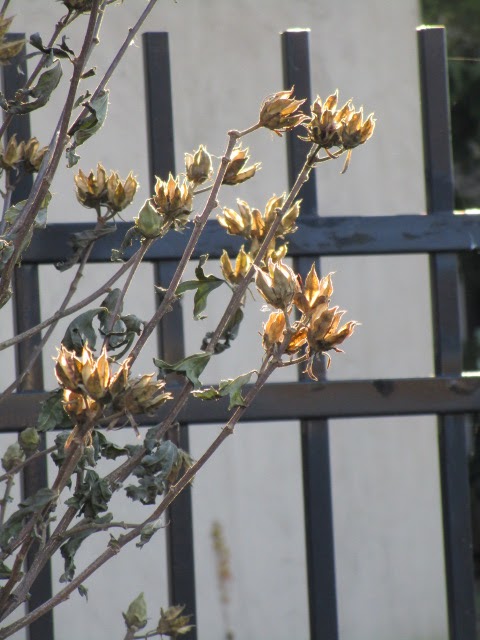
You gotta look up every once in a while if you want to know a little something about trees. What remains of last year's blooms is still hanging on the Tulip Trees in late February.
Showing posts with label Seeds. Show all posts
Wednesday, February 28, 2018
Tulip Tree Seed Pods in Winter
You gotta look up every once in a while if you want to know a little something about trees. What remains of last year's blooms is still hanging on the Tulip Trees in late February.
Wednesday, December 13, 2017
Seasonal Sleuthing
It's time to play the what's still hanging off the trees game to see if you can figure out what you are looking at. I spy long seed pods, so I'm going with the Northern Catalpa, or Cigar-tree.
Sunday, November 26, 2017
Friday, September 8, 2017
A Little Bit of Thistle and a Little Bit of Thastle
Oh allright. There is no such thing as Thastle.
Earlier in the week I didn't see any plumes of white hair that the seeds ride the wind with.
Today it looked like seeds were ready to fly.
Thursday, September 7, 2017
Tuesday, February 12, 2013
Back in the Park Again
Aster, winter, Floyd Bennett Field
I have written many nerdy posts about this garden in this old airfield and happy moments here. But I haven't gone so long without seeing this place though as I have recently, so this first moment this year at the garden this weekend might be the happiest yet. (and there was snow)
Thursday, December 27, 2012
Two Haunts

Bookends for the year: One picture taken near the year's end and one from its early beginnings at two haunts of mine. (The bike lane near Floyd Bennett and over in Prospect Park.)
One definition of haunt I wouldn't have guessed: "to continually seek the company of" and one I would have: "to stay around or persist; to linger". I've always liked the sound of that word, linger.
Friday, April 6, 2012
Baptisia Seed Pods in April
I'm a sucker for plants in the pea family (do you think they call the family fabaceae because it's so fab?) and a sucker for plants with pretty seed pods, so I'm doubly done in by our native Baptisia australis. Those rattling seed pods still looked beautiful standing stiffly after the winter before they were cut down this afternoon.
Friday, March 16, 2012
Beneath the Straw Mulch
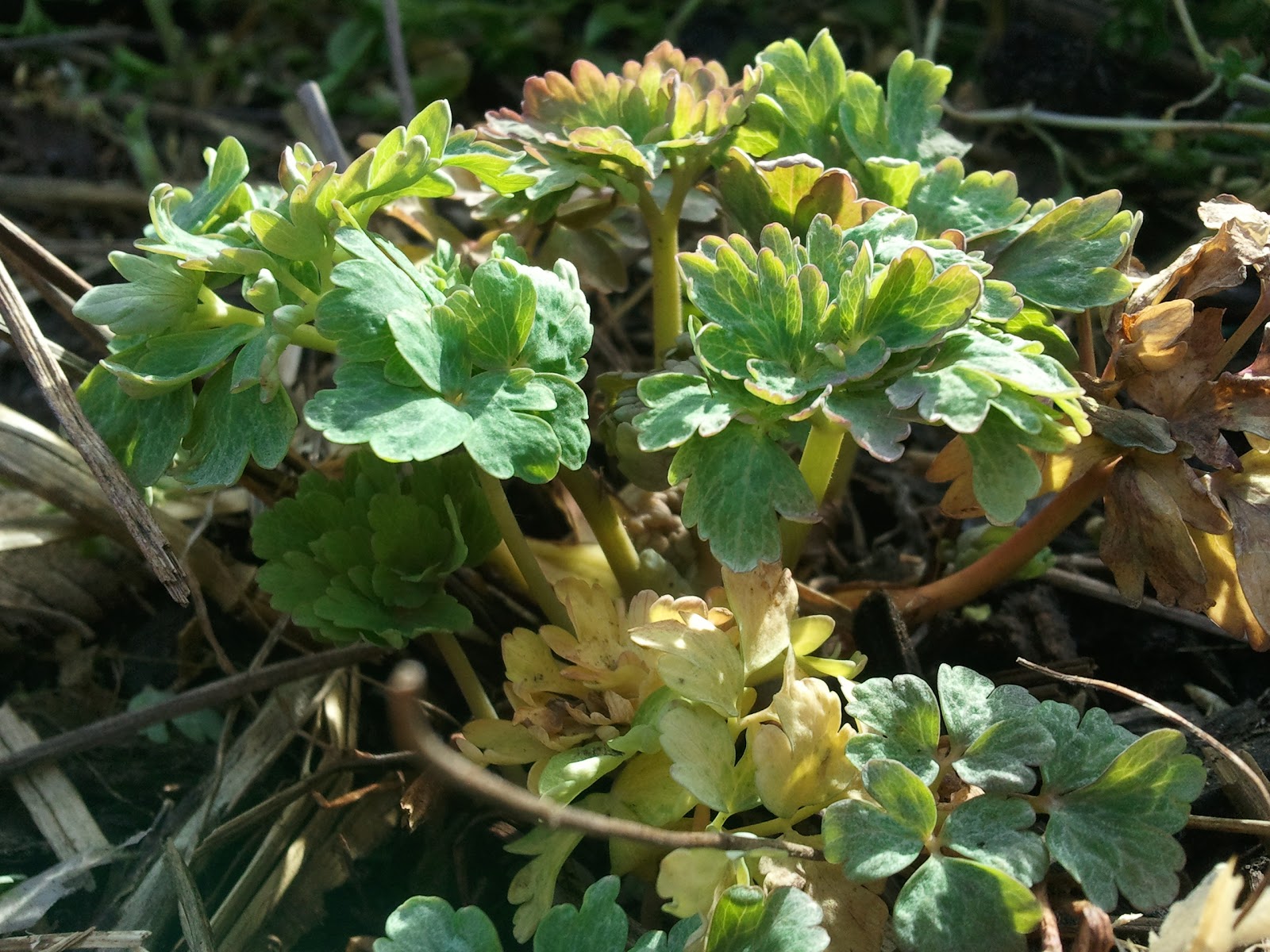
of the vegetable garden I found the columbine plant that I'd sowed from seed last winter. Will it bloom this year I wonder? It's been a long enough wait it seems already. It's almost a year since it produced its first true leaf below, and months and months longer still if I date all the way back to when I harvested the seed while working one afternoon in 2010 with Mike in the plant family collection at Brooklyn Botanic. It will be that much extra sweet I hope when I finally see it bloom.
It's hard for me to really fathom the kind of patience that it must take to be a plant breeder or to be a regular grower of perennials from seed, but I think I'm beginning to understand how the practice might be addicting and rewarding if you had a little space to dedicate to it.
Monday, February 6, 2012
Which Came First?
The Broccoli rabe or the egg? The definitive answer to this age old question is finally in and it looks like we're gonna have to give it up to the egg.
So it's one thing to sow seeds in an old egg carton, but now Joe's sowing in egg shells? Seriously? They remind me of wee terrariums missing their covers, but if I know Joe, though he may be an artist, there's a practical method behind his gardening madness. I'm just not sure whether he thinks it's going to be easier to slide the seedlings out of the eggshells rather than the carton or if he's thinking that he might then also crush the shells to ward off potential insect predators who might not want to slither over the broken shards, therefore protecting his seedlings. Not to mention that the eggshells will also eventually be broken down in the soil, releasing calcium and potassium among other things useful to plants. (Joe's always a step ahead of me. Here I am just thinking about getting a cold frame going because of this warm winter and already he's moving his recently sown seeds to the window sill, a pitstop on the way to his coldframe.)
Is there a lesson here? I think there is, but it doesn't necessarily have anything to do with DIY craftiness or eggshells. I think it has more to do with the idea of having a willingness to experiment in the garden and also with having a willingness to celebrate the unexpected small pleasures that are always a part of the process. If you really want to get the most out of being a gardener, cultivating your sense of wonder is at least as important as sowing seeds.
Lest you think that having a sense of wonder is a frivolous idea, here are the words of one with a much bigger mind who went before me:
"A child's world is fresh and new and beautiful, full of wonder and excitement. It is our misfortune that for most of us that clear-eyed vision, that true instinct for what is beautiful and awe-inspiring, is dimmed and even lost before we reach adulthood. If I had influence with the good fairy who is supposed to preside over the christening of all children I should ask that her gift to each child in the world be a sense of wonder so indestructible that it would last throughout life, as an unfailing antidote against the boredom and disenchantments of later years, the sterile preoccupation with things that are artificial, the alienation from the sources of our strength." - Rachel Carlson, A Sense of Wonder
Tuesday, January 24, 2012
Counting Seasons
We draw hard lines between the seasons on a calendar and we mark our own time in years in the same way too. But the seasons bleed into each other, with evidence of last year's autumn via lingering seed heads on this year's winter day and still future plants just seeds waving in the wind. My best friend's son turned a year old today and he is just beginning to walk and to name the world around him. Now I've been wandering around on two feet for many more seasons than him, but still in some ways I too am just figuring out the world around me.
Monday, January 23, 2012
If It Looks Like a Pea
Seed pods of Albizia julibrissin (Silk Tree, Mimosa), Park Slope, Brooklyn
then it just might be related. When you start out to know the names of plants and identify the things growing around you, the task can seem overwhelming. If you've never paid attention before, you might find yourself bewildered at every corner, even in a densely urban area like New York City known more for its steel skyscrapers and architecture than for its teeming plant life. But there are street trees everywhere and landscaping plants around apartment buildings and a lot to see if you keep your eyes open and focused on more than the pavement. So you start with what you've got in the way of knowledge and make associations based on what you know. It's pretty likely when you see something above your head that reminds you of a snow pea pod that you are looking at a tree in the same family as the pea. If that's only as far as you get, it's not so bad. It's a big world with a lot of plants and you can't learn everything at once. In this case, the pea pods belong to the Albizia julibrissin, which has more than one common name in the US. And while it is planted for decorative reasons, it is also a tree that has naturalized in Brooklyn and more southern parts of the US, and in some places it is labelled as an invasive species.
Friday, January 20, 2012
Just a Bit of The High Line in January
I was at the High Line this afternoon and of course, when I was there I felt that the place had been designed solely for me and for a sunny winter day, with all kinds of wonderful plant parts catching the sunlight or in silhouette giving me a place to rest my eyes. But at the same time, I know the park wasn't conceived and designed solely for plant geeks and garden nuts, although plants are one of its most important design elements. For a lot of people, I'd imagine it's just this cool public space raised above the city streets, a transportation corridor repurposed as a park, that provides a place to sit or walk, explore or take in a view of the Hudson and Manhattan skyline, and that's fine too. You don't have to be mad for witchhazel (although quite frankly, how could you not be?) to have noticed it today or know what grass seed head caught your eye to have enjoyed the sight of both. But the sight alone might spark the curiosity to know a little more about plants. You never know. I woke up to plants through vegetable gardening. For some people, the High Line might be the thing to do it.
Calamagrostis brachytricha in January at the High Line
Because the darkest of browns counts as a color too
Tuesday, December 27, 2011
They are Farmers, They Grow Food For The People
I said before that I receive regular e-mailed updates and a newsletter from my potato seed farmer,(Wood Prairie Farm) and this video arrived today. If it doesn't play here, follow the link to the youtube video uploaded by Food Democracy Now.
Wednesday, December 14, 2011
With Regard to Seeds
"With regard to seeds- some look like snuff, others like very light blond nits, or like shiny and blackish blood-red fleas without legs, some are flat like seals, others inflated like balls, others thin like needles; they are winged, prickly, downy, naked and hairy; big like cockroaches and tiny like specks of dust. I tell you that every kind is different, and each is strange, life is complex. Out of this big plumed monster a low and dry thistle is supposed to grow, whereas out of these yellow nits a fat gigantic cotyledon is supposed to come. What am I to do? I simply don't believe it."
Karel Capek, The Gardener's Year, Chapter 4, Seeds.
Like Capek, I am apt not to believe in seeds or rather I tend not to believe in the ones I sow, always worried that somehow I haven't got it quite right this time round. Did I plant when it was too cold or too warm, will the rain wash them away or is it too hot and dry for them to stay sufficiently moist for germination? Maybe the seeds were too old, my fingers a jynx? I used to think this was mostly due to a certain anxious nature and insecurity in myself, but perhaps it's due to the fact that there's still a part of me that simply can't get over this most natural of things, that a plant should grow from a seed. Perhaps, this is universal even and the gist of what Capek is writing; that for all that we know, even at the highest levels of gardening expertise or science, we are all still a bit in awe with regard to seeds and that if we are not, maybe it is only because we are not regarding them in the right light.
I'm enjoying this book.
Friday, December 9, 2011
Just Potatoes
Are they just potatoes? Well, the seed potatoes came from a family farm from way up north in Maine, Wood Prairie Farm, and they were double certified, both organic and by the state of Maine. The first year that we grew potatoes at the community garden, it was just by some internet searching for certified seed potato that I found the Gerritsen's farm online and ordered some. They yielded well and we continued to order from the farm, both some other vegetable seed and each year since potatoes. But now, I don't just order my seed potatoes from Wood Prairie, I also follow the news about the farm, both in emailed newsletters they send out to customers and elsewhere. And some people are talking about Jim Gerritsen and The Organic Seed Growers and Trade Association's lawsuit against Monsanto these days.
So are they just potatoes? Well, yes they are. The ones pictured above are just some potatoes I grew. But there's more than one definition in the dictionary for the word just and it seems to me that the people I buy my seed potatoes from aren't just growing potatoes.
Thursday, December 8, 2011
On a Need to Know Basis
Sunflower grown for edible seeds, Floyd Bennett Field, Brooklyn, early August (4 months ago)
How much you come to know about sunflowers depends on how much you need to know. It's a personal thing really. Do you need to know when it might bloom as an annual for decorative purposes? Do you need to know what the optimal soil temperature is for germination because you want to plant seeds or are you curious about when you can expect to harvest yours because you like to eat sunflower seeds? Care to know what the top sunflower oil producing countries are or where in the United States the most sunflowers are grown? Maybe you'd be satisfied with just knowing what local farmers sell them as greens at the farmers market. Are they annual or perennial, open pollinated or hybrid? Are the ones you buy in a bouquet bred to be pollenless for the cutflower market? Are you curious to know what pesticides were used on the ones raised for oil that made their way into the bag of chips at the bodega and how those chemicals might be effecting bees?
There's an entire world to explore in just sunflowers. How much you come to know about sunflowers depends mostly on how much you need to know and the questions you ask.
How much you come to know about sunflowers depends on how much you need to know. It's a personal thing really. Do you need to know when it might bloom as an annual for decorative purposes? Do you need to know what the optimal soil temperature is for germination because you want to plant seeds or are you curious about when you can expect to harvest yours because you like to eat sunflower seeds? Care to know what the top sunflower oil producing countries are or where in the United States the most sunflowers are grown? Maybe you'd be satisfied with just knowing what local farmers sell them as greens at the farmers market. Are they annual or perennial, open pollinated or hybrid? Are the ones you buy in a bouquet bred to be pollenless for the cutflower market? Are you curious to know what pesticides were used on the ones raised for oil that made their way into the bag of chips at the bodega and how those chemicals might be effecting bees?
There's an entire world to explore in just sunflowers. How much you come to know about sunflowers depends mostly on how much you need to know and the questions you ask.
Monday, December 5, 2011
Something to think about in December
Look at some seed heads on White Snakeroot as you pass through the park. Start thinking about seeds. Chuck some seed heads from your garden over the fence into an empty lot. Will the seeds be dispersed and germinate? Who knows. Keep thinking about seeds. Go through last year's flowers seed packages with Susan and wonder how many seeds it would take to fill an abandoned lot. But if eventually you find yourself staring at a picture you took of a Cardoon seed head at Brooklyn Botanic from last December, you should probably tell yourself that's it. It's time to stop thinking about seeds already and just start thinking about something else. It's time for dinner anyway.
Cut up the last of the beets from your garden for salad and think about how it was dark today before 5pm. Then think about how the next time somebody says to you that we are almost at the shortest day of the year, which is good because then the days will start getting longer again, you will just tell them they are delusional. You will say no, all that it really means is that we have the whole winter before us. You will say no, what it really means is it's a long time till beets out of the garden again. Wait a second. Take a breath. You know what you should do? You should probably just eat those beets slow and think about something else. You should probably just start thinking about seeds.
Friday, November 25, 2011
What These Things Are and What They Are Not
They are not just pretty pictures of beautiful things. They are the practices of letting some vegetables go to seed to attract beneficials or collect seed, using covercrops and other means to build up the soil, growing herbs alongside vegetables, and adding diversity to a monocrop. They may look effortlessly beautiful, but they are in fact the result of the deliberate and thoughtful work of gardeners (and of course, the plants themselves). I'm not just paying attention here because I think it's pretty. I'm trying to learn something.
Wednesday, November 23, 2011
The Naming of Things We Are Thankful For
Last year I gave thanks for my brother's turkey and roses, my nieces and their dresses (if these little gals think there's any chance that there will be dancing going on, they are going to change their clothes), most especially a year of wonder working as a horticultural intern at Brooklyn Botanic among some trees a century old and the beauty of some Camellias blooming in the cold. Because again it is the time to reflect on the graces of the year, I culled from some pictures throughout the year since last Thanksgiving, wanting only to choose images that defined for me something I could name and give thanks for in each month. There are only four images corresponding to four months above, from late November through February, the time through the darkest and coldest days until the first blooms of the year. That's as far as I got in one sitting.
To name those things above and give thanks: Top Left: November, For my garden neighbors, their plants seeding and for things that might wander into my garden. Bottom Left: December, For plants studied, remembered and revisited at Brooklyn Botanic. Top Right: January, For the year with Verbena bonariensis, my pollinator magnet and for prodigious self-sowers, the volunteers of gardens. Bottom Right: February, For all of the firsts of a lifetime, in particular this year, my first bike ride of winter and the first winter blooms. I could be briefer and just name my thanks for seeds, for decorative bark and the tree silhouettes of winter, what remains of the seasons growth that's interesting to look at when the tree canopy is bare and it's ridiculously cold outside, and for the promise of spring always evident in winter if you look for it.
Maybe later I will be inspired to wade through some more pictures to finish out all the months, but for now, it's enough to remind myself of the things that I'll need to keep in mind and seek out this time of year, the part that I find challenging to get through in good spirits. (And that's mostly because I am a wimp in the cold, overly sensitive to the weather and already missing the long bright days of spring and summer.)
Subscribe to:
Posts (Atom)


.jpg)